Fall of the Rebel Angels
11 November 2026
Having a bad day at the office? It could be worse…
The Fall of the Rebel Angels is heaven’s worst-ever staff dispute. Lucifer, the brightest angel of all, decides he would rather rule than serve, recruits a third of heaven to his cause, and loses the war to the archangel Michael. His punishment: eviction, headfirst, into hell. Betrayal, defeat and eternal damnation, all before lunch.
The literal term “fallen angel” does not appear in any of the Abrahamic religious texts, but is used to describe angels cast out of heaven. Such angels are often described as corrupting humanity by teaching forbidden knowledge, or by tempting humans into sin. Common motifs for their expulsion are lust, pride, envy, or an attempt to usurp divinity.
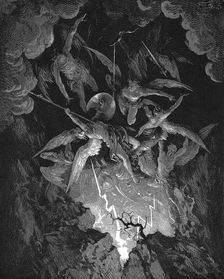
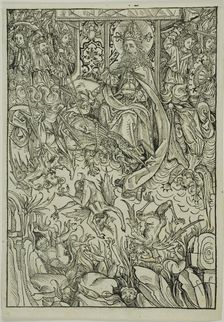
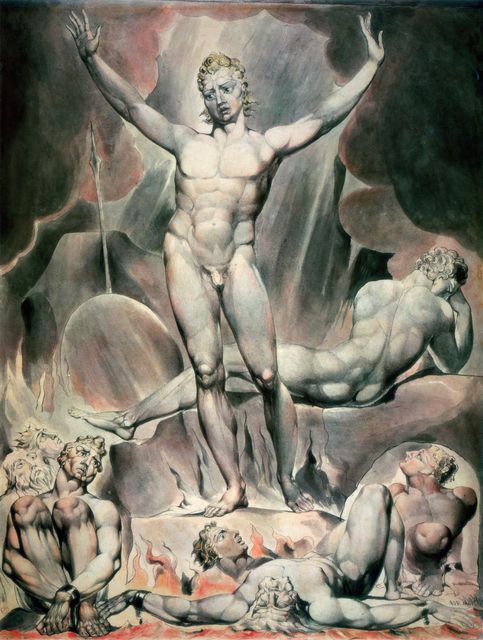
This was fertile ground for artists. William Blake’s naked Satan (1808) stands with arms raised as the rebels burn. In Brueghel’s nightmarish vision (1562), the sky is filled with fish-faced, many-limbed horrors, while Floris (1554) gives us flailing, muscular bodies with snakes for hair, and sinuous tails. Medieval illuminators, in the Très Riches Heures (c1414), imagined the falling angels, in bright blue robes, igniting as they are expelled from heaven under God’s stern gaze. Doré’s angels (1866) illustrating “Paradise Lost”, writhe in the darkness, illuminated by the fires they are hurtling towards. Michael Wolgemut’s woodcut (1491) shows that falling from grace was a popular subject long before Milton. And the Livre de bonnes meurs (c1430) shows the righteous angels poking the demon-angels into the flaming maw of a giant monster.
Still having a bad day?