Search Results

29pages,1,704results in your"" Searchfor"Other"- Refine your search withAdvanced Search
Current Lightbox
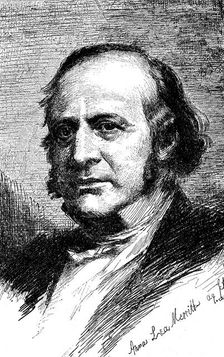
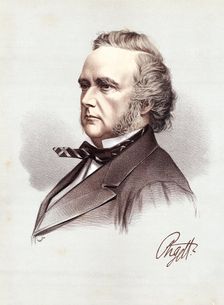
Professor Edward Frankland, 1880.Artist: Lock & Whitfield
 
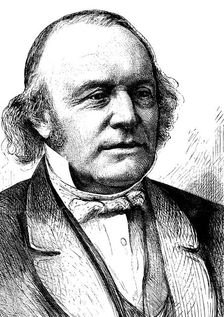
John Tyndall, DCL, LLD, FRS, Professor of Natural Philosophy at the Royal Institution, 1877.Artist: Lock & Whitfield
 
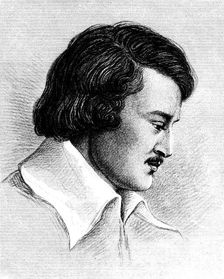
Blaise Pascal, French philosopher, mathematician, physicist and theologian, (1833). Artist: H Meyer
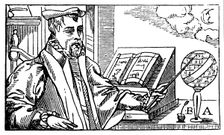
 
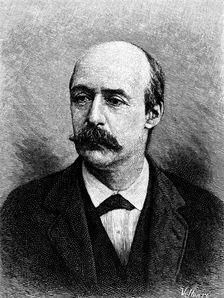
William Hyde Wollaston, English chemist and physicist, (1833).Artist: W Holl
 
John Ray, English naturalist, (1833).Artist: H Mayer
 
Robert Boyle, Irish-born chemist and physicist, (1833).Artist: R Woodman
 
Ryegate Tunnel, Surrey, 1829.Artist: J Rogers
 
John Napier, Scottish mathematician, physicist, astronomer and astrologer, (1870).Artist: S Freeman
 
Imperial Institute, London, 20th Century. Creator: Unknown
 
Henry Howard, 1st Earl of Northampton, (1825).Artist: R Cooper
 
Sir Kenelm Digby, English scientist and diplomat (1825). Artist: R Cooper
 
The Imperial Institute, South Kensington, London, 1899. Creator: Unknown
 
Old Parr 17th century, (1912).Artist: Peter Paul Rubens
 
Joseph Black, Scottish physicist and chemist, (1870).Artist: J Rogers
 
Patrick Colquhoun, Scottish police magistrate and statistical writer, (1870).Artist: S Freeman
 
John Anderson, Scottish professor of natural philosophy, (1870).Artist: William Holl
 
James Gregory, Scottish mathematician and astronomer, (1870).Artist: William Holl
 
William Cullen, Scottish physician and chemist, (1870).Artist: W Howison
 
Robert Gordon of Straloch, Scottish cartographer, (1870).Artist: S Freeman
 
Thomas Thomson, Scottish chemist, (1870).Artist: William Holl
 
Children of the Sklodowski family, Polish, c1870-1875
 
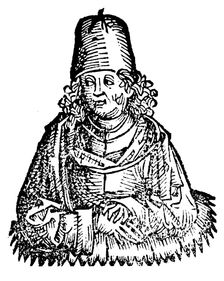
St Thomas Aquinas, Italian theologian and philosopher
 
Mammoth skeleton, 1823
 
Giant mastodon skeleton, 1830
 
The Five Senses: smell, hearing, sight, touch and taste, c1850
 
Nilometer on the island of Roda, Cairo, Egypt, c1895
 
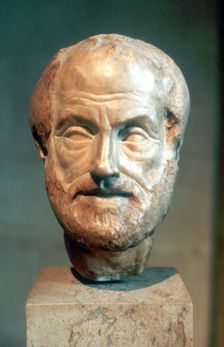
Aristotle, Ancient Greek philosopher and scientist, c1470-c1504. Artist: Pedro Berruguete
 
Cover of Frankenstein, by Mary Shelley, late 19th century
 
Hans Sloane, English physician and naturalist
 
Hans Sloane, English physician and naturalist, 1753
 
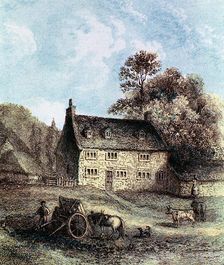
Isaac Newton's house, St Martin's Street, Leicester Square, London, c1850
 
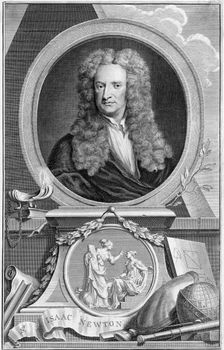
Isaac Newton, English mathematician, physicist and astronomer
 
School of Athens c1510. Artist: Raphael
 
Pythagoras, Greek mathematician, 1508
 
Karl Bosch, German chemist, c1930s
 
Pierre Marcellin Boule, French paleontologist, 20th century
 
Isaac Newton, English mathematician, astronomer and physicist, c1725. Artist: John Vanderbank
 
Microscope by Anton Van Leeuwenhoek, Dutch, c1670
 
Animalcules observed by Anton van Leeuwenhoek, c1795
 
Jabir Ibn Hayyan, Abu Musa, Arab chemist and alchemist
 
Ernest Rutherford, New Zealand-born physicist and the founder of nuclear physics
 
James Alfred Van Allen, American physicist, c1960s
 
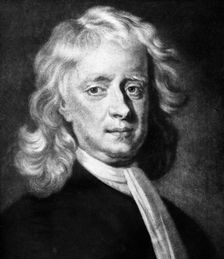
Isaac Newton, English mathematician, astronomer and physicist
 
Jean Francois Champollion, French historian, linguist and Egyptologist, 19th century
 
Hermes the Egyptian, alchemist, 17th century
 
Radium experiment, 1904. Artist: Poyet
 
Louis Pasteur 1885. Artist: Albert Edelfelt
 
Gottfried Wilhelm von Leibniz, German philosopher and mathematician, 1781. Artist: Johann Elias Haid
 
Foucault using his pendulum to demonstrate the rotation of the Earth, Paris, 1851 (1887)
 
Frontispiece of Magia Naturalis by Johannes Baptista della Porta, 1715
 
The Eighth Key of Basil Valentine, legendary 15th century German monk, 1651
 
Alchemical symbol representing the transmutation of base metal into silver and gold, 1652
 
Distillation of nitric acid (Aqua fortis or parting acid) in an iron man with two noses 1689
 
Symbols of the synthesis of the Great Work, 1678
 
The Eleventh Key of Basil Valentine, legendary 15th century German monk and alchemist, 1651
 
Jean Bernoulli, Swiss mathematician, 1762
 
Jean Bernoulli, Swiss mathematician, c1750
 
Plate showing diagram of the optics of a reflecting telescope (Fig 29), 1704
 
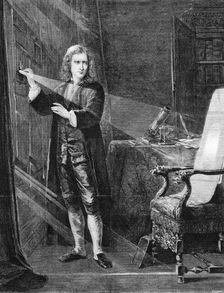
Isaac Newton's prism experiment showing how sunlight is split into its separate colours, 1747
 
Experiment showing that prismatic colours cannot be split further, 1747