Why did women sit sideways on horses?
28 October 2026
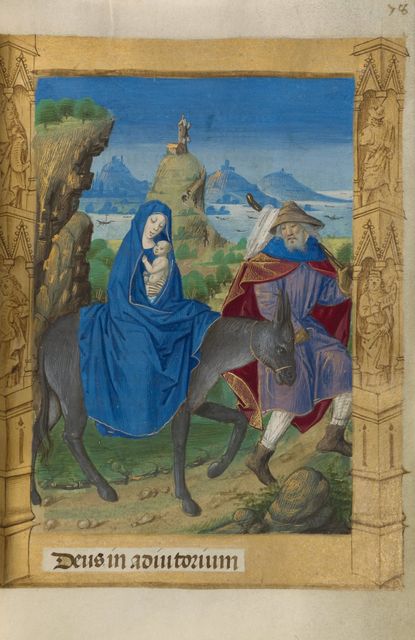
The practice of women riding side-saddle goes back centuries and was well established in medieval Europe, where it let women in long skirts ride in a way considered modest. Society thought it unbecoming for a woman to straddle a horse, and some also believed riding astride was sexually arousing, or could damage a young woman’s hymen and so cast doubt on her virginity. These worries were still being voiced as late as the 1970s.
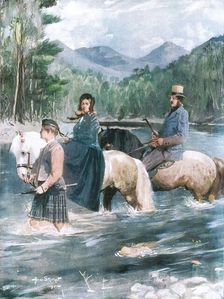
Riders themselves were more practical. In her 1893 book The Horsewoman, Alice Hayes listed the drawbacks of side-saddle, including that a lady “is unable, without assistance, to mount as readily as a man”. Queen Victoria rode side-saddle, as in this 1844 scene of her and Prince Albert crossing a river in Scotland.
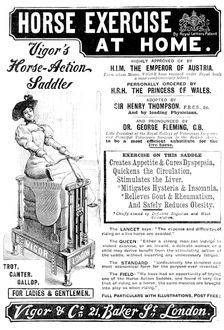
Victorians also had strong views about what riding did to the body. An 1895 advertisement for Vigor’s Horse-Action Saddle, an indoor riding machine, promised to cure dyspepsia, mitigate hysteria and insomnia, ‘and safely reduce obesity’. Endorsed by the Princess of Wales, it also claimed to be ‘the most efficient substitute for the live horse’.
Our 16th-century woodcut depicts the dominatrix Phyllis riding side-saddle, not on a horse but on the ancient Greek philosopher Aristotle. It is a humorous take on a medieval cautionary tale about the triumph of a seductive woman.
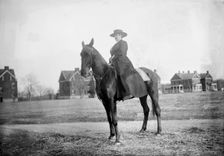
By 1913, suffragettes such as Mrs. Russell M. McLennan were riding (horses) astride in defiance of convention. It is now the norm that most modern horsewomen ride in this way, however the Side Saddle Association claims that riding side-saddle will make you feel ‘elegant, poised and special’.